
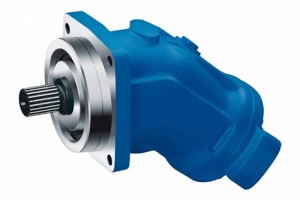
Hydraulic motors are the heavy lifters of the industrial world, responsible for converting fluid pressure and flow into rotational force and speed. From the massive winches on offshore drilling rigs to the precise movements of construction machinery, these components are essential for modern infrastructure. However, no mechanical system is perfect, and energy loss is an inherent part of the hydraulic process. In an era where energy costs are rising and environmental regulations are tightening, understanding hydraulic motor efficiency is no longer just for engineers. It is a vital pursuit for any operator or business owner looking to maximize performance, reduce downtime, and extend the lifespan of their expensive machinery.
The Three Pillars of Hydraulic Efficiency
To truly grasp how a hydraulic motor performs, one must look at efficiency through three distinct lenses: volumetric, mechanical, and overall efficiency. Volumetric efficiency refers to how well the motor uses the fluid provided to it. In a perfect world, every drop of oil entering the motor would contribute to its rotation, but in reality, internal leakage is inevitable. Some fluid always slips through the clearances between moving parts to provide necessary lubrication, which means the motor often spins slightly slower than the theoretical calculation suggests.
Mechanical efficiency, on the other hand, deals with the friction between moving components. Bearings, seals, and the interface between pistons and cam rings all create resistance. This friction consumes a portion of the energy that should be going toward the output torque. Finally, overall efficiency is the product of these two factors. It represents the total percentage of hydraulic power that is successfully converted into useful mechanical work. By monitoring these three pillars, maintenance teams can identify whether a drop in performance is due to worn-out seals or a more complex mechanical failure.
Pressure and Speed Dynamics
Every hydraulic motor has a “sweet spot” where it operates at peak efficiency, and this is determined by the relationship between pressure and speed. Most motors are designed to be most efficient at higher pressures and moderate speeds. At very low speeds, the internal leakage becomes a larger percentage of the total flow, which can lead to jerky movements known as cogging. At the other end of the spectrum, extremely high speeds increase the fluid velocity to the point where turbulence and flow resistance within the motor’s ports begin to sap power.
Operating a motor consistently at its maximum rated pressure can also lead to premature wear, which eventually degrades efficiency. Pressure spikes or “water hammer” effects can cause micro-damage to the internal surfaces, increasing the gaps where fluid can leak. For this reason, system designers often aim to operate motors at roughly seventy to eighty percent of their maximum capacity. This buffer ensures that the motor remains efficient throughout its duty cycle while providing enough head-room to handle occasional peak loads without catastrophic failure.
Mechanical Friction and Seal Integrity
The internal geometry of the motor, whether it is a gear, vane, or piston design, dictates its inherent mechanical friction. Piston motors generally offer the highest efficiency because they can maintain tighter tolerances and handle higher pressures with less leakage. However, even the best design is at the mercy of its seals. Seals are the unsung heroes of hydraulic efficiency, tasked with keeping high-pressure fluid where it belongs while allowing shafts to rotate freely.
As seals age, they can harden or wear down, especially if the fluid is contaminated with particulates. When a seal fails to provide a perfect barrier, the resulting bypass flow directly subtracts from the motor’s torque output. Furthermore, excessive friction from a seal that is too tight or incorrectly installed can lead to “stiction,” where the motor requires a higher than normal pressure just to begin rotating. Regular inspection of seal integrity and the use of low-friction sealing materials are essential strategies for maintaining high mechanical efficiency over the long term.
Looking Toward an Efficient Future
As we look toward the future of fluid power, the focus on efficiency is driving new innovations in motor design. We are seeing the rise of digital hydraulics, where valves can open and close in milliseconds to provide exactly the amount of fluid needed, and the development of new coatings that further reduce mechanical friction. However, the fundamentals remain the same. The most efficient systems will always be those that are correctly sized, filled with clean and appropriate fluid, and maintained with a watchful eye on temperature and pressure.
Maximizing hydraulic motor efficiency is a continuous process of monitoring and adjustment. By understanding the factors that affect performance, from fluid chemistry to mechanical clearances, operators can ensure that their equipment runs as lean and powerful as the day it was installed. In the end, a more efficient motor is not just a technical achievement; it is a more sustainable and profitable way to move the world.